The Quantum Clock Is Already Ticking on America's Autonomous Arsenal
The threat here has a deceptively benign name: harvest now, decrypt later. An adversary does not need a working quantum computer today to compromise encrypted military data today. It only needs to intercept and store the command and control traffic now, then decrypt it once the hardware matures. The piece argues the Pentagon is building a generation of autonomous drones and munitions on cryptographic foundations a future quantum computer will break, and that a drone designed in 2026 to fly into the 2040s cannot ship with encryption expected to fail in the 2030s. This is the part of the quantum story that actually keeps me up at night, and it sits right at the intersection of two areas I spend a lot of time thinking about.
Why World Models Are AI's Next Frontier
Large language models predict the next word. World models try to understand how the physical world actually works: space, physics, cause and effect. The distinction matters because true general intelligence requires the ability to revise your internal model when conditions change, something LLMs struggle with the moment they leave the distribution of their training data. Yann LeCun believes in this so strongly that he left Meta to pursue it, predicting that within three to five years nobody in their right mind will use LLMs of the type we have today. Whether or not that timeline holds, world models are where physical AI and robotics get genuinely interesting, and where I think a lot of value gets created over the next decade.
Magazine Architect
Morgan Housel built this one around a single phrase he heard and could not shake. A magazine architect is someone who designs a house to look impressive in photographs rather than to actually be lived in, and the metaphor extends to almost everything: careers, companies, public personas optimized for how they appear rather than how they function. The most successful people he knows are almost the opposite, willing to look unimpressive in the moment in exchange for substance that compounds. It is a short read and a sharp one, and it lingers longer than its length suggests.
More …
The Art Of Winning Requires One Thing Most People Won't Give
Arnold Schwarzenegger has told versions of this story for forty years and it still works, mostly because he is not selling anything abstract. The thing most people will not give is the unglamorous volume of reps, done when nobody is watching and nothing is happening.
How To Explain Anything To Anyone
Sharran Srivatsaa packs a genuinely useful communication framework into about sixty seconds. Clarity wins when you give people four things: context, understanding, practical guidance, and one obvious next step.
More …
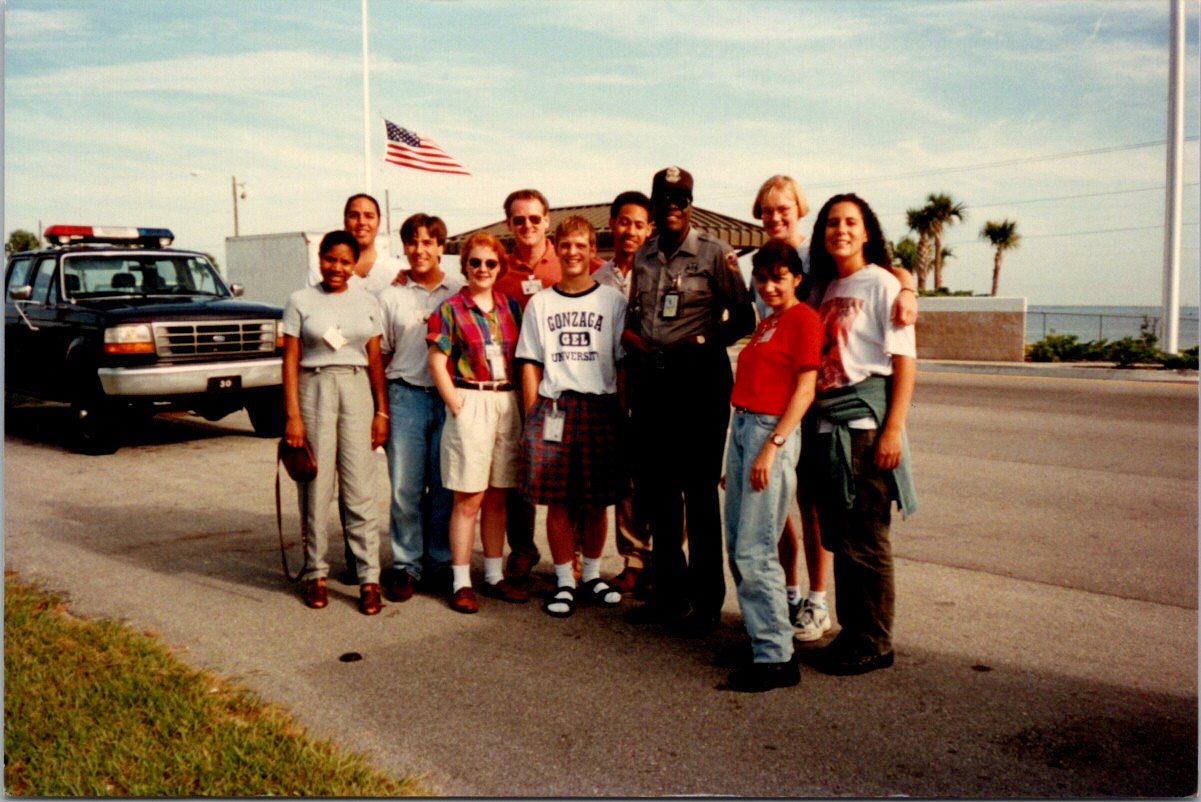
In the summer of 1997, I was a premed student at NYU with a secret: I was way more interested in computers than cadavers. So when I landed a research internship at NASA's biology labs at Kennedy Space Center in Cape Canaveral, Florida, I told myself it was the perfect compromise. Computers AND biology. Science AND technology. Mom would be proud.
I was twenty years old, riding a Greyhound-style bus from the intern housing to the Space Center every morning, wearing my NASA badge like it was a backstage pass to the future. Which, in a way, it was. I just didn't know it yet.
More …
Who do you trust to tell you what's good?
We are drowning in recommendations and somehow more lost than ever. Algorithms have gotten very good at predicting what you might click next based on what you already clicked, but that is not the same thing as taste. This piece makes a compelling case that the most valuable signal is still just a real person with a genuine point of view sharing something they love, and that the personal context behind a recommendation is what makes it worth anything at all. It left me thinking about how much I trust the people I actually know over any platform that claims to know me.
Freedom is not the highest form of wealth
The author spent two years with genuine freedom and came back with a counterintuitive conclusion: meaning is the highest form of wealth, not freedom. His argument is that the pursuit of freedom provides its own meaning, but once freedom is actually achieved it loses that meaning entirely. What you're left with is an existential "now what" that nobody warned you about. I found this one genuinely thought-provoking, especially for people at a stage where they've already won the financial game and are figuring out what the next chapter is actually for.
The human work behind humanoid robots is being hidden
This MIT Technology Review piece should be required reading for anyone investing in physical AI. The argument is that the humanoid robotics industry is quietly obscuring how much human labor is still required to make these machines look autonomous, and the parallel to Tesla's early Autopilot branding is hard to ignore. Workers spend weeks in VR headsets and motion capture suits performing repetitive tasks just to generate training data, and remote operators step in when robots get stuck in ways the demo videos never show. The gap between what these companies are demonstrating and what is actually happening operationally is significant.
More …
Why toilet paper keeps getting smaller and smaller
These days, a regular Charmin Ultra Soft roll, if you can find one, has 56 sheets. Even the roll they market as “Double” doesn’t have 170 sheets — it has 154. And the 1992 rolls are hardly the largest — the back of the package includes a note from parent company Procter & Gamble explaining these rolls have fewer sheets than a previous version.
How Will You Measure Your Life? By HBR
One of the theories that gives great insight on the first question—how to be sure we find happiness in our careers—is from Frederick Herzberg, who asserts that the powerful motivator in our lives isn’t money; it’s the opportunity to learn, grow in responsibilities, contribute to others, and be recognized for achievements.
Brain-driven prosthesis marks scientific advance for people with amputations
It’s a scientific advance that allows for a smoother gait and enhanced ability to navigate obstacles.
“This is the first prosthetic study in history that shows a leg prosthesis under full neural modulation, where a biomimetic gait emerges. No one has been able to show this level of brain control that produces a natural gait, where the human’s nervous system is controlling the movement, not a robotic control algorithm,” says Hugh Herr, a professor of media arts and sciences, co-director of the K. Lisa Yang Center for Bionics at MIT.
More ...