The Quantum Clock Is Already Ticking on America's Autonomous Arsenal
The threat here has a deceptively benign name: harvest now, decrypt later. An adversary does not need a working quantum computer today to compromise encrypted military data today. It only needs to intercept and store the command and control traffic now, then decrypt it once the hardware matures. The piece argues the Pentagon is building a generation of autonomous drones and munitions on cryptographic foundations a future quantum computer will break, and that a drone designed in 2026 to fly into the 2040s cannot ship with encryption expected to fail in the 2030s. This is the part of the quantum story that actually keeps me up at night, and it sits right at the intersection of two areas I spend a lot of time thinking about.
Why World Models Are AI's Next Frontier
Large language models predict the next word. World models try to understand how the physical world actually works: space, physics, cause and effect. The distinction matters because true general intelligence requires the ability to revise your internal model when conditions change, something LLMs struggle with the moment they leave the distribution of their training data. Yann LeCun believes in this so strongly that he left Meta to pursue it, predicting that within three to five years nobody in their right mind will use LLMs of the type we have today. Whether or not that timeline holds, world models are where physical AI and robotics get genuinely interesting, and where I think a lot of value gets created over the next decade.
Magazine Architect
Morgan Housel built this one around a single phrase he heard and could not shake. A magazine architect is someone who designs a house to look impressive in photographs rather than to actually be lived in, and the metaphor extends to almost everything: careers, companies, public personas optimized for how they appear rather than how they function. The most successful people he knows are almost the opposite, willing to look unimpressive in the moment in exchange for substance that compounds. It is a short read and a sharp one, and it lingers longer than its length suggests.
More …
Ghost in the Machine
Valerie Veatch premiered this at Sundance in January and it has since been picked up by Independent Lens. It examines artificial intelligence through the longer history of human technological advancement, and it is not a friendly film toward the current moment. One critic described it as a Molotov cocktail thrown into the middle of our overinflated AI hype, which gives you a sense of the register. I am invested across this sector and I still think the strongest skeptical case deserves a real hearing. This is that case, made well.
Machine God
John Greer and Lei Huang have been building a documentary on accelerationism and the people pushing hardest toward artificial superintelligence, and the trailer alone tells you the register they are working in. Watch it back to back with Ghost in the Machine and you get the two poles of the current argument in their strongest form, which is a more useful education than reading another hundred posts from either camp. The interviews behind it include some of the most committed accelerationists working today.
The Oldest Person in the World
Sam Green spent more than a decade following successive holders of the title of oldest living person, which means the film keeps losing its subject and finding a new one. What starts as a documentary about extreme longevity turns into something closer to a meditation on time, luck, and what it actually feels like to outlast everyone. It premiered at Sundance in January and reviews have been strong. For a category I spend real money and attention on, this was a useful corrective. Living longest is not the same thing as living well.
More …
The Art Of Winning Requires One Thing Most People Won't Give
Arnold Schwarzenegger has told versions of this story for forty years and it still works, mostly because he is not selling anything abstract. The thing most people will not give is the unglamorous volume of reps, done when nobody is watching and nothing is happening.
How To Explain Anything To Anyone
Sharran Srivatsaa packs a genuinely useful communication framework into about sixty seconds. Clarity wins when you give people four things: context, understanding, practical guidance, and one obvious next step.
More …
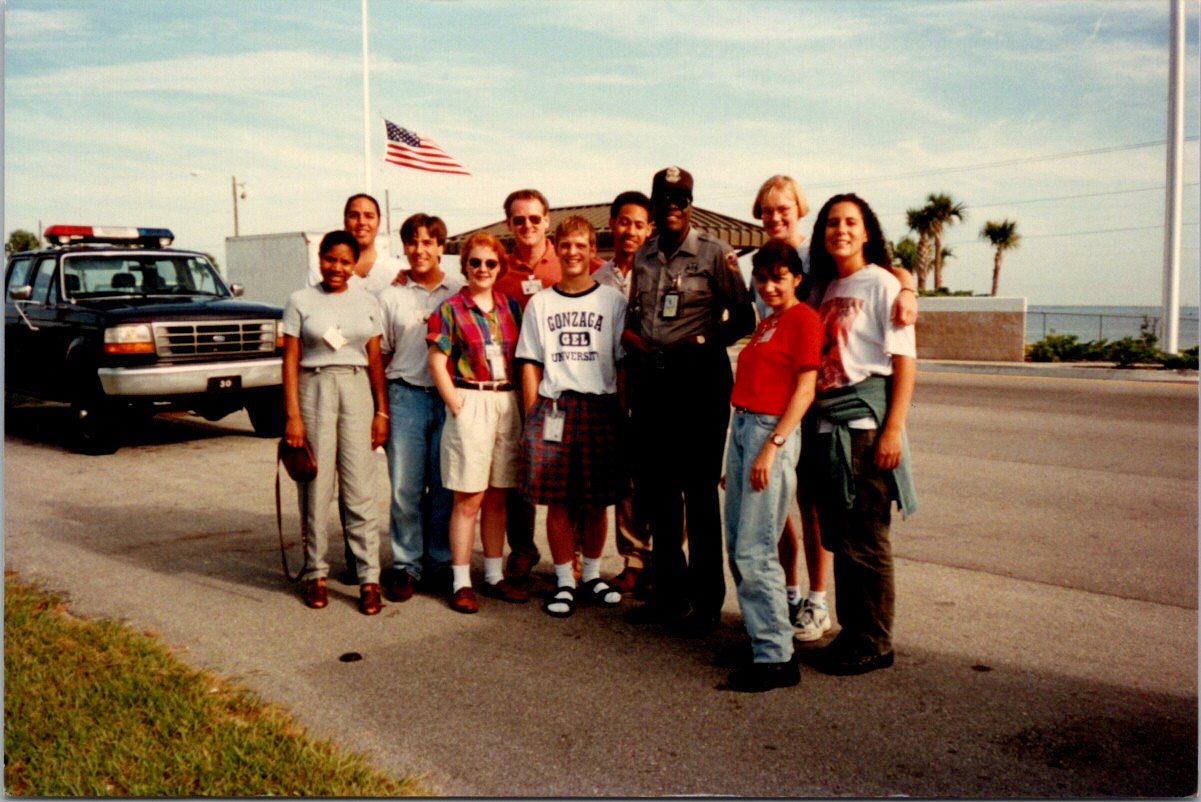
In the summer of 1997, I was a premed student at NYU with a secret: I was way more interested in computers than cadavers. So when I landed a research internship at NASA's biology labs at Kennedy Space Center in Cape Canaveral, Florida, I told myself it was the perfect compromise. Computers AND biology. Science AND technology. Mom would be proud.
I was twenty years old, riding a Greyhound-style bus from the intern housing to the Space Center every morning, wearing my NASA badge like it was a backstage pass to the future. Which, in a way, it was. I just didn't know it yet.
More …
Who do you trust to tell you what's good?
We are drowning in recommendations and somehow more lost than ever. Algorithms have gotten very good at predicting what you might click next based on what you already clicked, but that is not the same thing as taste. This piece makes a compelling case that the most valuable signal is still just a real person with a genuine point of view sharing something they love, and that the personal context behind a recommendation is what makes it worth anything at all. It left me thinking about how much I trust the people I actually know over any platform that claims to know me.
Freedom is not the highest form of wealth
The author spent two years with genuine freedom and came back with a counterintuitive conclusion: meaning is the highest form of wealth, not freedom. His argument is that the pursuit of freedom provides its own meaning, but once freedom is actually achieved it loses that meaning entirely. What you're left with is an existential "now what" that nobody warned you about. I found this one genuinely thought-provoking, especially for people at a stage where they've already won the financial game and are figuring out what the next chapter is actually for.
The human work behind humanoid robots is being hidden
This MIT Technology Review piece should be required reading for anyone investing in physical AI. The argument is that the humanoid robotics industry is quietly obscuring how much human labor is still required to make these machines look autonomous, and the parallel to Tesla's early Autopilot branding is hard to ignore. Workers spend weeks in VR headsets and motion capture suits performing repetitive tasks just to generate training data, and remote operators step in when robots get stuck in ways the demo videos never show. The gap between what these companies are demonstrating and what is actually happening operationally is significant.
More …
The Anthropic Hive Mind
Steve Yegge spent years as a senior engineer at both Google and Amazon, so when he says something unusual is happening at Anthropic, it's worth paying attention. His argument isn't just about the models. It's about the organizational culture, the caliber of people, and the way the company thinks collectively. Interesting read regardless of where you stand on the AI race.
Meet the Startups Trying to Build Military-Specific AI
A wave of veteran-founded startups is now building AI trained exclusively on military and combat data, designed to work without cloud connectivity in denied environments. Companies like Smack Technologies just closed a $32M seed round on this thesis. The bet is that the Pentagon will never fully trust a general-purpose model for critical decisions, and that purpose-built systems are the only real path to adoption.
How to Design a More Meaningful Life
Dave Evans and Bill Burnett, the Stanford professors who wrote Designing Your Life, join Dr. Laurie Santos on The Happiness Lab to make the case that major life decisions shouldn't be planned, they should be prototyped. The idea is to treat your own life like a design problem: run small experiments, iterate, and let the data tell you what works. Practical in a way that most self-help conversations aren't.
More…
In Praise of Being Yourself
Entrepreneur Fabrice Grinda shares an essay on authenticity, personal freedom, and the importance of living life on your own terms.
This Aromatherapy Expert Swears It’s Life-Changing
Explores how natural scents may influence mood, stress levels, and even memory. Experts weigh in on the benefits of aromatherapy in our daily lives.
Can You Trust a Man by His Clothes?
A stylish and philosophical piece analyzing how fashion influences perception, trust, and identity in modern society.
More …
The AI Dollar Thesis
This article explores the convergence of AI and the U.S. dollar, discussing how U.S. tech companies exporting AI globally may reinforce the dollar's dominance. It offers an interesting thesis that blends macroeconomics and innovation, highlighting why software (especially AI) might become America's most important export.
Economic Uncertainty Has Never Felt This Uncertain
A Bloomberg Opinion piece that dissects the layered complexities of today’s economy. It breaks down why markets feel off balance even when data points appear solid and how uncertainty itself is being redefined.
More …