The Quantum Clock Is Already Ticking on America's Autonomous Arsenal
The threat here has a deceptively benign name: harvest now, decrypt later. An adversary does not need a working quantum computer today to compromise encrypted military data today. It only needs to intercept and store the command and control traffic now, then decrypt it once the hardware matures. The piece argues the Pentagon is building a generation of autonomous drones and munitions on cryptographic foundations a future quantum computer will break, and that a drone designed in 2026 to fly into the 2040s cannot ship with encryption expected to fail in the 2030s. This is the part of the quantum story that actually keeps me up at night, and it sits right at the intersection of two areas I spend a lot of time thinking about.
Why World Models Are AI's Next Frontier
Large language models predict the next word. World models try to understand how the physical world actually works: space, physics, cause and effect. The distinction matters because true general intelligence requires the ability to revise your internal model when conditions change, something LLMs struggle with the moment they leave the distribution of their training data. Yann LeCun believes in this so strongly that he left Meta to pursue it, predicting that within three to five years nobody in their right mind will use LLMs of the type we have today. Whether or not that timeline holds, world models are where physical AI and robotics get genuinely interesting, and where I think a lot of value gets created over the next decade.
Magazine Architect
Morgan Housel built this one around a single phrase he heard and could not shake. A magazine architect is someone who designs a house to look impressive in photographs rather than to actually be lived in, and the metaphor extends to almost everything: careers, companies, public personas optimized for how they appear rather than how they function. The most successful people he knows are almost the opposite, willing to look unimpressive in the moment in exchange for substance that compounds. It is a short read and a sharp one, and it lingers longer than its length suggests.
More …
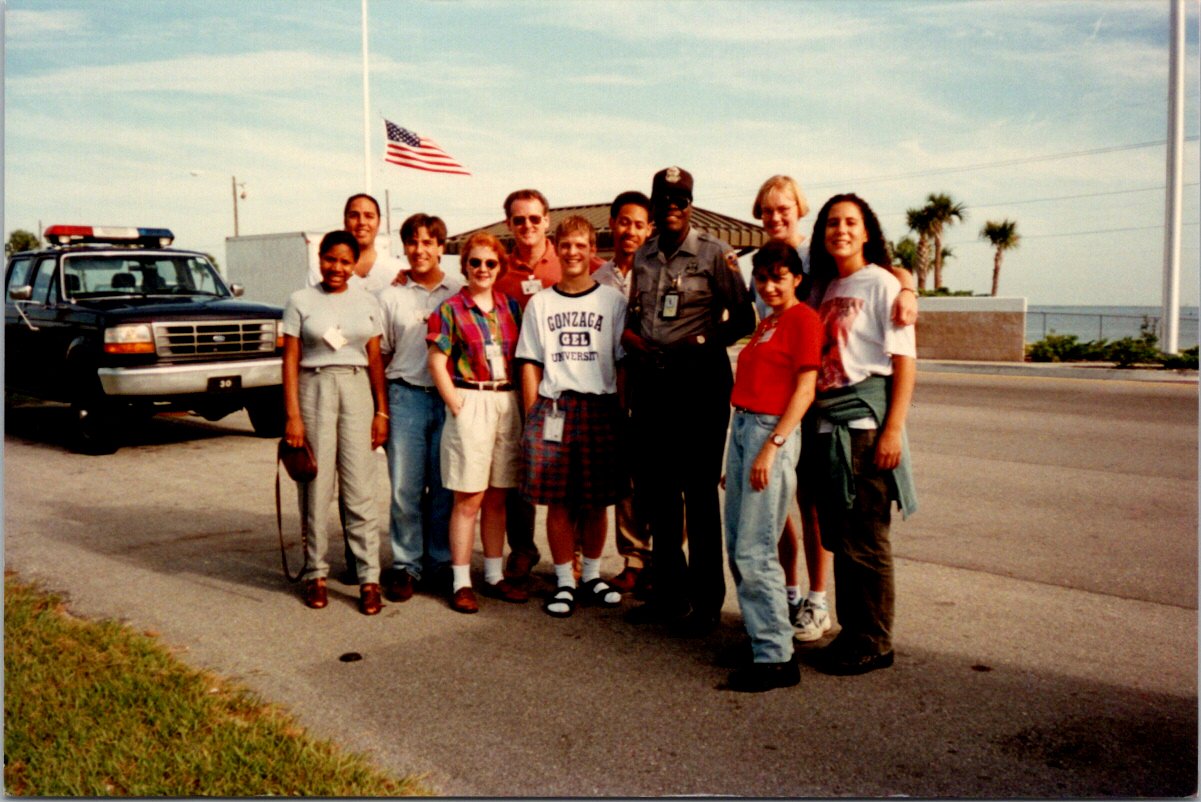
In the summer of 1997, I was a premed student at NYU with a secret: I was way more interested in computers than cadavers. So when I landed a research internship at NASA's biology labs at Kennedy Space Center in Cape Canaveral, Florida, I told myself it was the perfect compromise. Computers AND biology. Science AND technology. Mom would be proud.
I was twenty years old, riding a Greyhound-style bus from the intern housing to the Space Center every morning, wearing my NASA badge like it was a backstage pass to the future. Which, in a way, it was. I just didn't know it yet.
More …
The Anthropic Hive Mind
Steve Yegge spent years as a senior engineer at both Google and Amazon, so when he says something unusual is happening at Anthropic, it's worth paying attention. His argument isn't just about the models. It's about the organizational culture, the caliber of people, and the way the company thinks collectively. Interesting read regardless of where you stand on the AI race.
Meet the Startups Trying to Build Military-Specific AI
A wave of veteran-founded startups is now building AI trained exclusively on military and combat data, designed to work without cloud connectivity in denied environments. Companies like Smack Technologies just closed a $32M seed round on this thesis. The bet is that the Pentagon will never fully trust a general-purpose model for critical decisions, and that purpose-built systems are the only real path to adoption.
How to Design a More Meaningful Life
Dave Evans and Bill Burnett, the Stanford professors who wrote Designing Your Life, join Dr. Laurie Santos on The Happiness Lab to make the case that major life decisions shouldn't be planned, they should be prototyped. The idea is to treat your own life like a design problem: run small experiments, iterate, and let the data tell you what works. Practical in a way that most self-help conversations aren't.
More…
AI agents are starting to eat SaaS - Martin Alderson
We spent fifteen years watching software eat the world. Entire industries got swallowed by software - retail, media, finance - you name it, there has been incredible disruption over the past couple of decades with a proliferation of SaaS tooling. This has led to a huge swath of SaaS companies - valued, collectively, in the trillions.
The Simple Path to Wealth: Your Road Map to Financial Independence and a Rich, Free Life
The Simple Path to Wealth by J.L. Collins is a popular personal finance book that offers a straightforward guide to achieving financial independence through simple, long-term investing strategies, focusing on low-cost index funds and avoiding complex financial products. It provides actionable advice on debt elimination, retirement accounts (like 401(k)s, IRAs, and HSAs), and asset allocation, all presented in an accessible, often humorous style, based on the advice Collins gave his daughter.
Swearing Can Actually Be Good For You, According to New Research
Dropping an F-bomb can boost your performance by helping you feel stronger, more focused, and disinhibited, say scientists. Most who curse like a sailor know that letting out a swear word in a moment of frustration can feel good. Now, new research by psychologists suggests that it really can be good for your well-being.
More …
Certainty After Chaos – The Raw Founder
A personal reflection on navigating uncertainty and the critical importance of internal grounding in leadership, especially after experiencing professional or existential chaos.
Do Microwaves Destroy Nutrients?
This piece examines the persistent myth that microwaving food ruins its nutritional value and explains why it's often one of the healthiest cooking methods due to shorter cooking times and less water.
The Illusion of Progress
This article delves into the concept that not all advancements are truly beneficial, challenging the conventional belief that progress is inherently good and always leads to a better world.
More …