The Original Startup Was a Suitcase and a One-Way Ticket
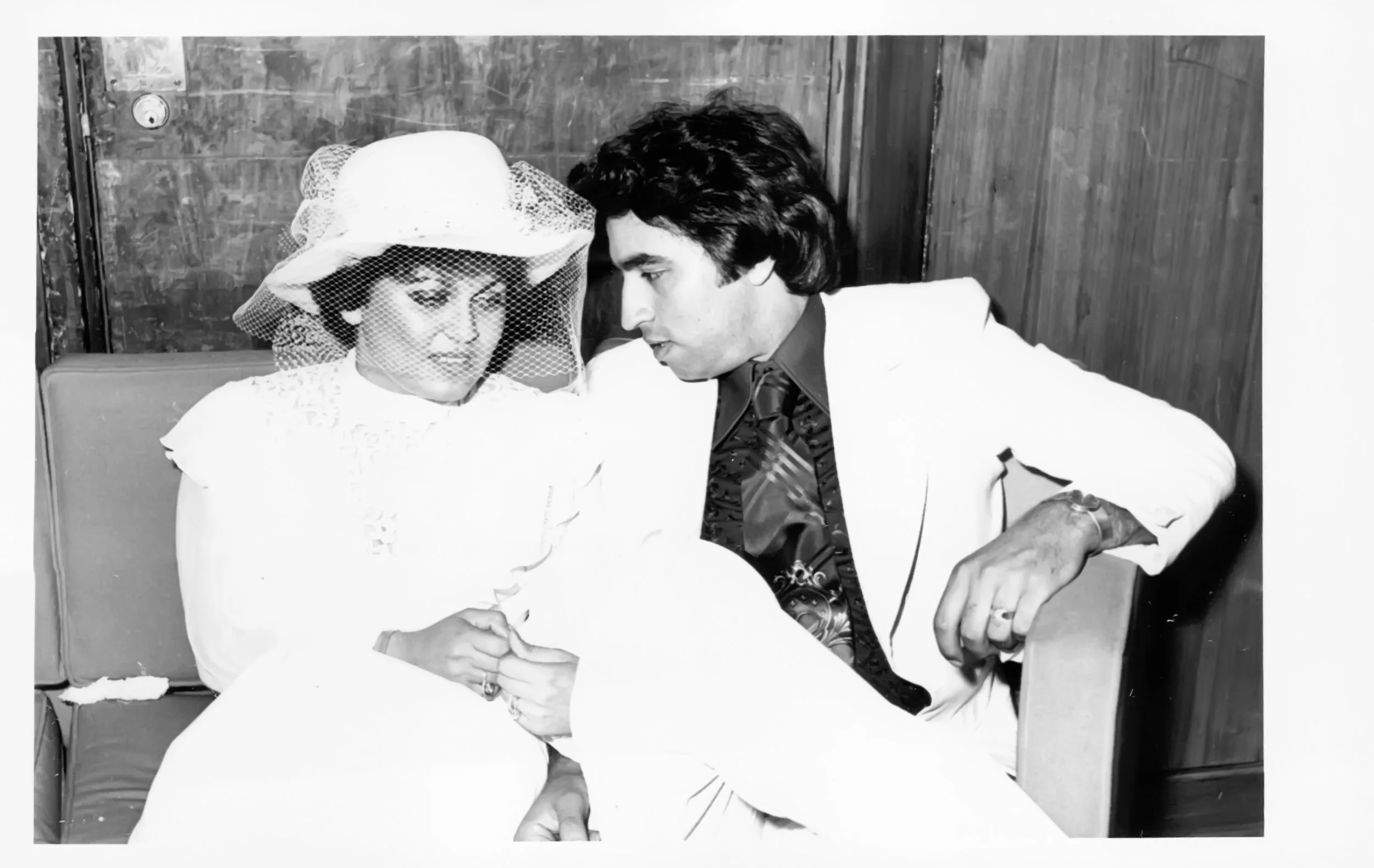
My parents left Iran with one suitcase and a few hundred dollars. They didn't speak English fluently. They didn't have jobs waiting for them. They didn't have a network, a safety net, or a five-year plan. What they had was a conviction that the country they loved was no longer a place where they could build the life they wanted for their children. And that conviction was enough to make them walk away from everything they'd ever known.
I've told pieces of this story before, in interviews, in conversations, in the margins of my book. But I've never sat down and written the whole thing. And I've never connected it, directly and explicitly, to the way I think about investing, risk, and building a life. So I'm doing that now. Because as I get older, and as I watch my own kids grow up in a world of abundance and opportunity, I realize that the most important lessons I carry aren't from college, or from medical school (which I dropped out of), or even from the nightlife industry (which taught me more than both combined). The most important lessons came from watching two people with nothing build everything.
Tehran, Late 1970’s
My father was an architect in Tehran. A good one. He designed buildings and understood structure, both literal and metaphorical. He had a career, a reputation, and a community. My mother was an English tutor, which in pre-revolution Iran was a respected and stable profession. Together, they had built a comfortable, middle-class life in one of the most cosmopolitan cities in the Middle East.
And then the revolution came.
I'm not going to relitigate the politics of the Iranian Revolution. Smarter people than me have written entire libraries about it. But what I will say is this: for the Jewish community in Iran, which had existed for over 2,500 years, the revolution represented an existential threat. The new regime's ideology was hostile to religious minorities, and the signals coming from the government were clear and terrifying.
My parents made a decision. They would leave. Not eventually. Not when things got worse. Now. While they still could.
This is the part of the story that I keep coming back to, because it mirrors everything I've learned about risk and decision-making in my career: they left while things were still manageable. They didn't wait for the worst-case scenario to arrive. They read the signals, they assessed the trajectory, and they moved.
They packed what they could carry, said goodbye to family members they might never see again, and got on a plane. Destination: New York City. The original asymmetric bet.
Brooklyn, Starting From Zero
They landed in Brooklyn with almost nothing. My father's architecture credentials didn't transfer to the American system. My mother's English tutoring business was irrelevant in a country where everyone already spoke English. The professional identities they'd spent years building in Iran were, overnight, worthless.
So they did what immigrants do. They adapted. They hustled. They started a clothing line from scratch, learning an entirely new industry from the ground up. They worked brutal hours. They made mistakes. They got knocked down and got back up. And slowly, painstakingly, they built a new life.
I was born in Queens, and we eventually moved to Long Island, where I grew up in Great Neck. And while my childhood was stable and suburban on the surface, underneath it, I always knew that our family's foundation was different from many of the families around us. We weren't generational Americans with deep roots and inherited networks. We were transplants. Every comfort we had was earned, not given. And the stories my parents told, quietly, around the dinner table, about the life they'd left behind and the sacrifices they'd made, shaped me in ways I'm still discovering.
What I Absorbed Without Realizing It
Growing up in a Persian immigrant household, I absorbed a set of principles that I didn't have words for until much later in life. Looking back now, with the vocabulary of an investor and entrepreneur, I can see them clearly:
The first principle was tangible ownership. My parents believed, deeply and unshakably, in owning things you could touch. Property. Businesses. Physical assets. They had seen what happens when intangible things, social status, professional credentials, political stability, disappear overnight. And they never fully trusted anything they couldn't hold in their hands.
This is why I own real estate. Not as a financial optimization strategy (although it is one), but as a philosophical commitment. When I buy a building, part of me is honoring a worldview that my parents carried across an ocean: own something real, something that can't be revoked by a regime change or a market crash or a policy decision.
The second principle was asymmetric positioning. My parents' decision to leave Iran was the purest expression of asymmetric risk I've ever seen. The downside was enormous: losing their home, their careers, their community, their culture. But the upside was unlimited: a new life in a country with no ceiling on what they could achieve. They traded known comfort for unknown potential. And they did it with children to feed.
Every time I write a check to a startup, I'm making a version of that same bet. Capped downside (I can lose my investment) against uncapped upside (the company could transform an industry). The scale is different. The stakes are lower. But the mental model is identical. And I learned it not from reading Peter Thiel. I learned it from watching my parents pack a suitcase.
The third principle was urgency. My father died when he was 44. I was in my twenties, and the loss was devastating. But beyond the grief, his death implanted a ticking clock in my psyche that has never stopped. Life is short. Opportunities don't wait. If you see something that matters, move. Don't deliberate for years. Don't wait for perfect conditions. Act with the information you have and the conviction you feel, because tomorrow is not guaranteed.
My father's early death is the reason I dropped out of medical school when I realized it wasn't for me. It's the reason I started JoonBug from nothing instead of getting a safe corporate job. It's the reason I take NAD+ boosters and practice intermittent fasting and write about longevity. And it's the reason I invest with intensity and focus rather than casual diversification. Because time is the one asset you can never get more of.
The Permission Slip
There's a specific moment that I want to share because it changed my life, and I think about it almost every day.
When I decided to leave medical school, I was terrified. Not of failure. I was terrified of disappointing my family. For a Persian family, having a doctor in the family is not just a point of pride. It's a validation of the entire immigrant journey. My parents left everything so their children could become doctors, lawyers, engineers. Dropping out of medical school felt like betraying the sacrifice they'd made.
So I told my mom. I sat down with her and explained that I was miserable, that medicine wasn't for me, and that I wanted to pursue technology and entrepreneurship instead. I braced myself for disappointment, for tears, for the guilt trip of a lifetime.
And she looked at me and said: "My love, just go and do it. I know I am going to read about you in the newspapers!"
That was the permission slip. Not permission to leave medical school, because I was a grown man and I didn't need permission for that. It was permission to stop being the person I thought I was supposed to be and start being the person I actually was.
Every entrepreneur needs a permission slip. Not from an investor or a board or a mentor. From the person whose opinion matters most to them. The person whose disappointment they fear more than failure itself. For me, that person was my mom. And she didn't just give me permission. She gave me a prophecy.
I have not yet been in the newspapers. But I've built three companies, written a book, backed over fifty startups, and created a life that I'm deeply grateful for. And all of it traces back to that conversation with her.
What I'm Teaching My Kids
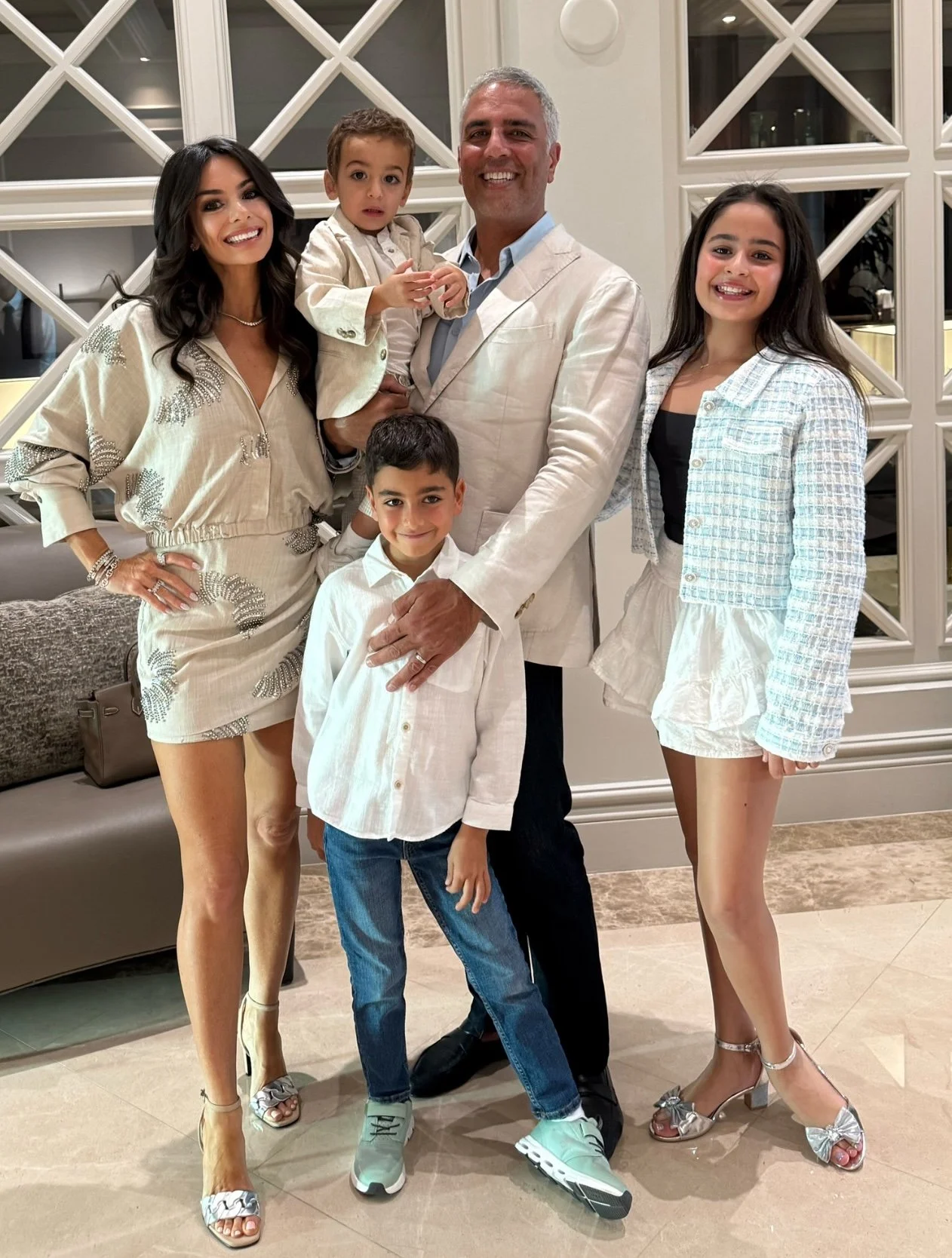
My kids are growing up in a very different world than the one my parents arrived in. They have stability, resources, education, and opportunity that would have been unimaginable to my parents in the 1970's. And while I'm grateful for all of that, I also worry about it.
Because the immigrant fire, the urgency, the scrappiness, the willingness to bet everything on a new beginning, that's not something you can teach from a textbook. It's forged in scarcity and uncertainty. And my kids, thankfully, haven't experienced scarcity or uncertainty.
So, I tell them stories. I tell them about their grandparents' journey. I tell them about my first startup called Offyx failing. I tell them about the T-Mobile crisis I had at EZ Texting where I almost lost the company. I tell them about being broke in a studio apartment on 58th Street, staring at Guastavino's through the window and thinking, "I have no money, no job, and no plan, but I'm going to throw the biggest party this city has ever seen."
I tell them these stories not to make them feel guilty for their privilege, but to help them understand that the comfort they enjoy was purchased with risk. That someone, somewhere in their family tree, made an asymmetric bet with everything on the line. And that the best way to honor that bet is to make their own.
Not necessarily with a suitcase and a one-way ticket. But with conviction. With courage. With the willingness to leave the familiar for the transformative, even when the familiar is comfortable and the transformative is terrifying.
The Asymmetric Life
I want to close with something that connects all the threads of this post, and honestly, all the threads of my life.
The asymmetric bet isn't just a financial concept. It's a way of living. It's the decision to leave Iran. It's the decision to drop out of medical school. It's the decision to start JoonBug from a studio apartment with zero dollars. It's the decision to fight T-Mobile in federal court. It's the decision to back a company building humanoid robots when most people think that's science fiction.
Every meaningful thing I've done has followed the same structure: accept a limited, manageable downside in exchange for an unlimited, transformative upside. And the willingness to make that trade, over and over again, across decades, is the single most important skill I possess.
I didn't learn it in school. I didn't learn it from a book. I learned it from a man and a woman who packed a suitcase, kissed their families goodbye, and got on a plane to a country they'd never been to, with a child on the way and dreams to chase.
That's the original startup. That's the original asymmetric bet. And everything I've built, everything I'm building, and everything I hope to build is a continuation of their journey.
For that, and for them, I am very grateful.